
Why it matters:
Our hands touch countless surfaces every day from door handles and mobile phones to money and food. This makes them a common source of germs. Washing your hands properly with soap and water for at least 20 seconds removes harmful bacteria and viruses that can cause flu, stomach infections, and other illnesses.
When to do it:
Before eating
After using the toilet
After coming home from outside
After touching pets, money, or garbage
Why it matters:
Water keeps every system in your body functioning properly — from your heart and kidneys to your brain. Proper hydration improves digestion, supports circulation, and helps flush out toxins. It also prevents headaches, fatigue, and urinary infections.
How much to drink:
Aim for 6–8 glasses of water daily. Drink more if you're sweating, exercising, or out in the sun.
Why it matters:
Sleep is your body’s natural way of healing. It boosts your immune system, improves concentration, and keeps your mood stable. Lack of sleep over time can lead to high blood pressure, diabetes, obesity, and even depression.
Tips for better sleep:
Sleep at the same time each night
Avoid screens at least 30 minutes before bed
Keep your room dark and quiet
Why it matters:
Food-borne illnesses are common but avoidable. Consuming unhygienic or improperly cooked food can lead to stomach infections, food poisoning, and long-term digestive problems.
Precautions to take:
Wash fruits and vegetables thoroughly
Cook meat, fish, and eggs fully
Avoid unclean street food
Store leftovers properly
Why it matters:
Regular movement strengthens your heart, improves lung capacity, boosts mood, and helps maintain a healthy weight. It also keeps joints and muscles strong, reducing the risk of injuries or stiffness.
Easy ways to stay active:
Take a morning walk
Use stairs instead of elevators
Stretch every 2 hours if you sit for long periods
Try yoga or simple home exercises
Why it matters:
Your hands often carry germs that can enter your body through your eyes, nose, or mouth. Touching your face without washing your hands increases your risk of catching colds, flu, or viruses.
Helpful tip:
Be mindful when you're in public spaces like buses, malls, or hospitals — avoid rubbing your eyes or biting your nails.
Why it matters:
When you cough or sneeze without covering your mouth, tiny droplets carrying germs spread through the air and infect others. Covering with a tissue or your elbow protects people around you.
What to do:
Always carry a tissue or handkerchief
Cough/sneeze into your elbow if nothing is available
Dispose of used tissues properly and sanitize hands
Why it matters:
Many illnesses like high blood pressure, diabetes, or thyroid issues start silently and show symptoms only in advanced stages. Regular checkups help detect them early and manage them effectively.
Who should do it:
Everyone above 30 should get a basic health screening once a year including blood pressure, blood sugar, cholesterol, and general wellness tests.
Why it matters:
Mental health affects how you feel, think, and act. Stress, anxiety, and sadness can impact sleep, immunity, appetite, and overall well-being. Taking care of your mind is as important as caring for your body.
Ways to improve mental health:
Talk to loved ones
Take breaks from work
Practice meditation or breathing exercises
Avoid overuse of social media
Why it matters:
Taking medicines without proper advice can be harmful. It may cause side effects, delay diagnosis, or lead to drug resistance. Always consult a doctor — even for common symptoms like headache or stomach upset.
Remember:
Even over-the-counter drugs should be used carefully and in the correct dosage.
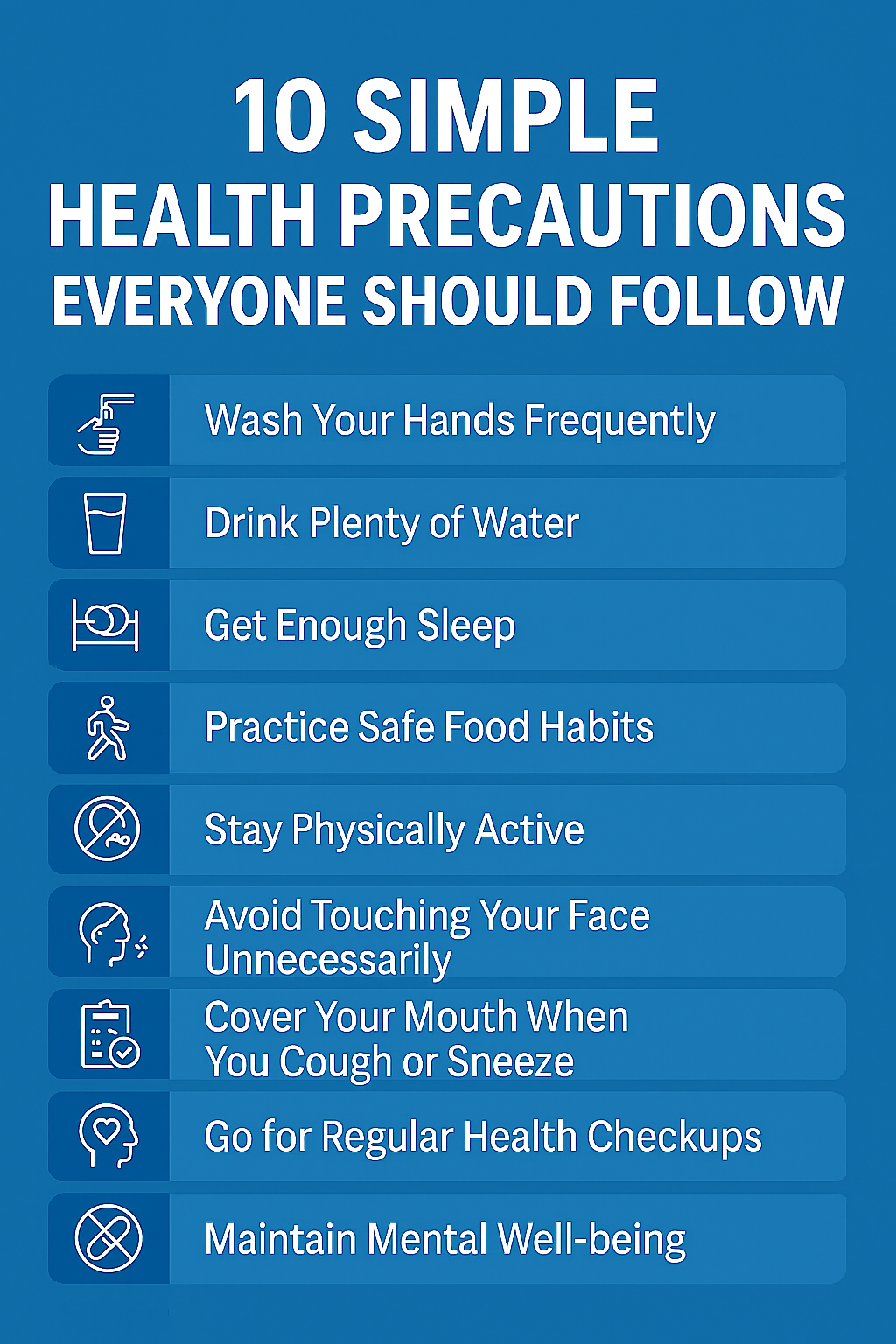
Following these 10 simple health precautions can help you stay stronger, healthier, and more energetic every day. At Sree Latha Hospital, Rajahmundry, we encourage preventive care and patient education because we believe that health begins with awareness.
For regular health checkups, guidance, or expert care, our team is always ready to help.
Stay safe. Stay healthy. Stay informed.